
HAMILTON, Ont. — August 25, 2026
Ontario Premier Doug Ford has sharply escalated his criticism of U.S. President Donald Trump, calling him a “bully” and a “loser” as an already serious Canada-U.S. trade dispute turned into a very public war of words.
Ford’s comments came Monday after Trump threatened to increase tariffs on Canadian-made cars, trucks, auto parts and steel to 50 per cent beginning January 1, 2027.
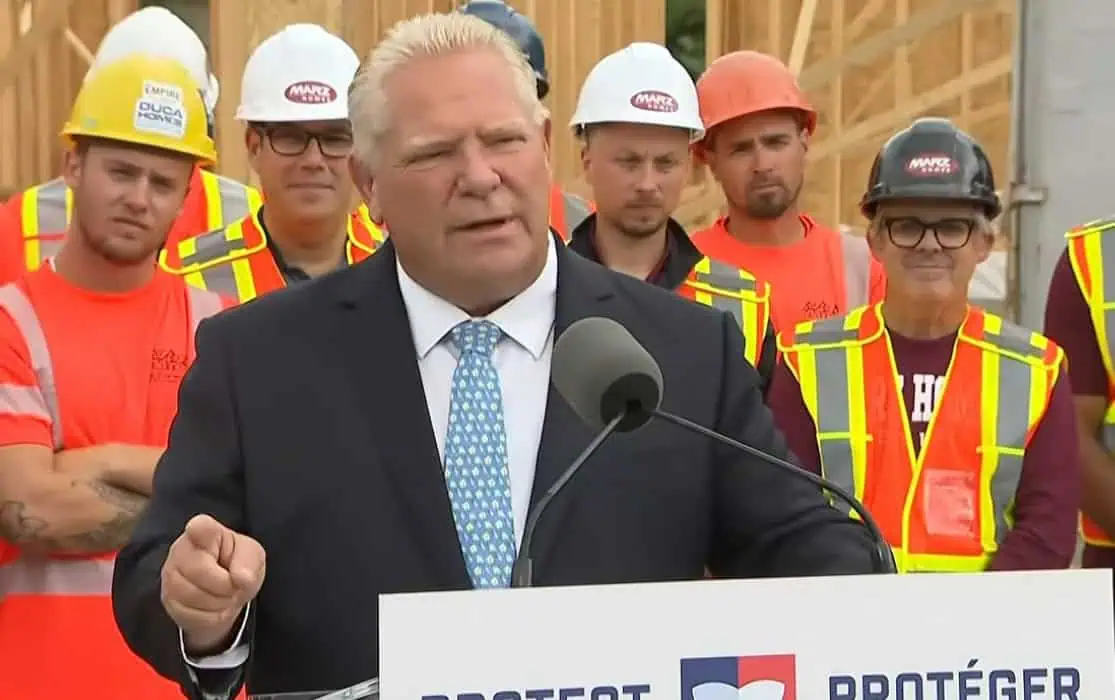
During a Toronto radio interview, Ford said Trump could “kiss my ass.” Hours later, he doubled down while speaking with reporters in Hamilton.
Trump responded on Truth Social, calling Ford a “flunky” and attacking him personally by comparing him unfavourably with his late brother, former Toronto mayor Rob Ford.
Ford was not backing down.
“Bring it on, buddy,” he told reporters.
The exchange may sound like political theatre, but behind the insults is a trade dispute with potentially serious consequences for Ontario workers and businesses.
Why Ford is angry with Trump
Canada and the United States had been trying to reach a new trade agreement, but negotiations collapsed late last week.
Prime Minister Mark Carney said the United States introduced last-minute demands that Canada considered unfair and economically damaging. Ottawa then suspended the talks.
Canada has already announced plans to retaliate against U.S. tariffs, with new Canadian counter-tariffs scheduled to take effect September 8.
Those measures are expected to target areas including steel, dairy products, appliances, agricultural equipment, pulp and paper, and electronics.
Trump responded Monday by threatening another major escalation.
He said tariffs on Canadian cars, trucks, auto parts and steel would rise to 50 per cent starting January 1.
That immediately puts Ontario near the centre of the dispute because the province is home to much of Canada’s automotive manufacturing industry.
The risk for Ontario is much bigger than the political argument
For Ontario, tariffs on vehicles and steel are not an abstract trade issue.
The province’s auto industry employed nearly 100,000 people in 2025, according to Ontario’s 2026 budget.
Canada’s auto industry is also heavily dependent on the American market. Statistics Canada estimates that about 76 per cent of jobs in automobile and light-duty vehicle manufacturing were tied to U.S. demand in 2024.
More than 93 per cent of Canadian motor vehicle exports also went to the United States.
That means a prolonged tariff fight could affect assembly plants, parts suppliers, steel producers and communities across southern Ontario.
Places such as Windsor, Oshawa, Oakville, St. Thomas and communities throughout the Greater Toronto and Hamilton Area have direct or indirect links to the automotive supply chain.
Ford says stronger retaliation should remain an option
Ford went beyond criticizing Trump’s latest tariff threat.
The Ontario premier said Canada should be prepared to use some of the leverage it has over the United States if the dispute continues.
That could include electricity exports and critical minerals.
Ford said Canada should be willing to make the United States “feel the pain” rather than simply accepting additional tariffs.
Ontario has used the electricity argument before during its disputes with the Trump administration. The province exports power to parts of the northeastern United States, while Canada is also an important supplier of minerals, energy and other resources used by American industries.
Ford argued that everything should remain on the table if Washington continues increasing economic pressure on Canada.
Ford also brought Ronald Reagan into the fight
Ford took another unusual swipe at Trump by invoking former Republican president Ronald Reagan.
In an interview with The Associated Press, Ford said Reagan would be “throwing up” over Trump’s tariff policies.
It was not a random reference.
Ford has previously used Reagan’s criticism of tariffs as part of Ontario’s campaign in the United States, arguing that protectionist policies can ultimately hurt American consumers and businesses as well.
His message Monday was similar: tariffs may hurt Canada, but Ford believes American workers and companies will also feel the effects of a prolonged trade war.
Trump tells Canadian leaders to “fall in line”
Trump’s response was equally confrontational.
After Ford and Carney criticized the U.S. position, Trump accused Canadian leaders of creating unnecessary “bluster” and told them to “fall in line.”
He warned that consequences for Canada could become worse if the dispute continues.
Prime Minister Carney has rejected that approach.
Carney said Canada cannot accept negotiations based on the idea that it is effectively subordinate to the United States. He has also argued that some of the American proposals would weaken important Canadian industries and limit Canada’s ability to make its own trade decisions.
Despite their political differences at home, Ford has backed Carney’s decision to walk away from the proposed U.S. deal.
Ford said the agreement would have been bad for Ontario’s auto, steel and manufacturing sectors.
What happens next?
The next important development will come from Ottawa.
Federal ministers are scheduled to announce new measures Tuesday to support Canadian workers and businesses affected by U.S. tariffs.
Canada’s retaliatory tariffs are currently scheduled to begin September 8.
Whether Trump’s proposed January 1 tariffs on vehicles and steel actually take effect could depend on what happens between now and then. Canada and the United States could return to negotiations, but after this week’s exchange, there is currently little sign of an immediate breakthrough.
For Ontario, the stakes are especially high.
The Ford-Trump feud may be grabbing headlines because of the language being used, but the bigger story is what happens to the province’s factories, steel plants, suppliers and workers if the trade fight continues.
