
Ontario and the federal government signed a new agreement today that’s meant to speed up major projects by reducing “double” environmental reviews. In simple terms: if a project would normally trigger both an Ontario environmental assessment and a federal impact assessment, the governments say they’ll use a single, coordinated approach more often.
The deal is being framed as a way to unlock critical-mineral development — especially in Northern Ontario’s Ring of Fire — while keeping environmental standards and Indigenous rights protections in place.
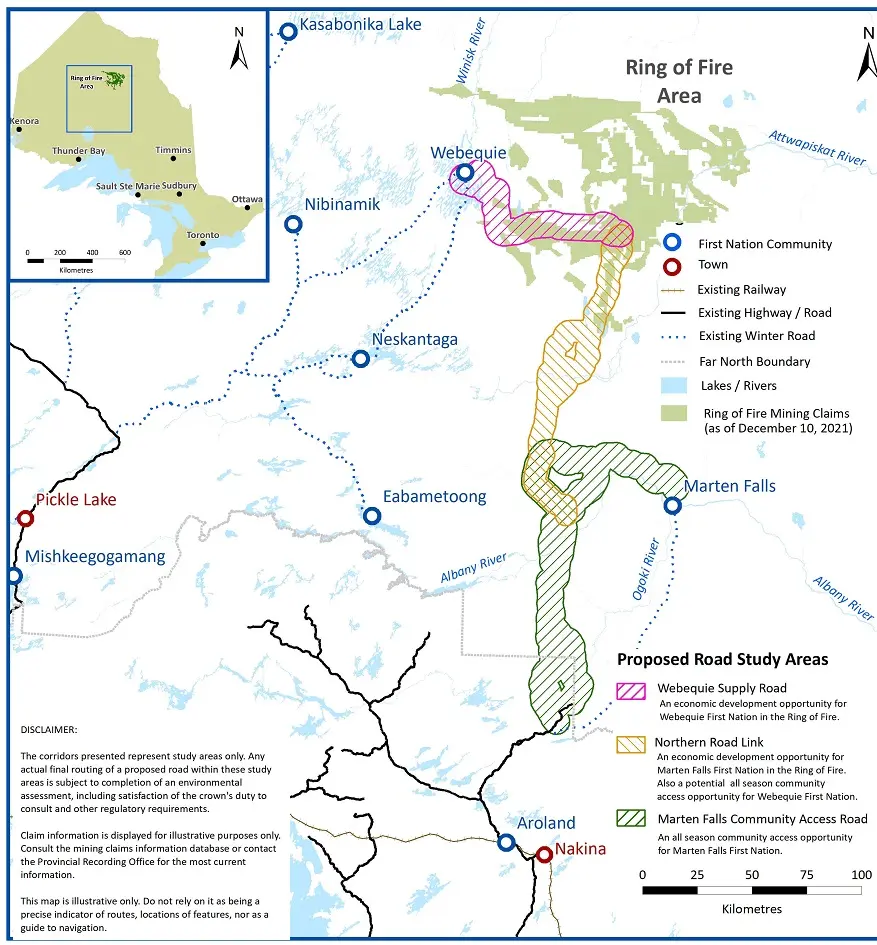
What’s new today
- A new federal–provincial co-operation agreement is now in effect for environmental and impact assessment work in Ontario.
- The model is described as “one project, one review” (or “one project, one process, one decision”).
- The agreement includes language targeting June 2026 for the Impact Assessment Agency of Canada to complete its review of roads connected to Ring of Fire development.
Read: Wealthsimple gold trading
What the agreement actually changes
Here’s the practical “before vs after”:
| Step | Before | Now (goal of the agreement) |
|---|---|---|
| When both governments have a role | Separate processes could run in parallel (two timelines, two info requests) | Use one shared evidence package and reduce duplication |
| Who leads | Could be both, depending on triggers | Case-by-case: Ontario-led, federal-led, or coordinated |
| Federal responsibilities | Assessed through federal process | Still assessed, but can be handled through reliance/coordination |
A key point: this isn’t a blanket “federal oversight disappears” switch. The public messaging is about removing duplication, but the federal government also says it will still use a federal process when Ottawa has primary jurisdiction, and a mixed approach when jurisdiction is shared.
What stays the same (important nuance)
Even with a streamlined model, major projects can still face federal requirements tied to things like:
- fish and fish habitat,
- migratory birds,
- species at risk,
- navigable waters,
- and the Crown’s duty to consult Indigenous rights holders.
So, the “one process” promise is really about how assessments are organized (and how many overlapping steps happen), not a guarantee that every project becomes faster automatically.
Why the Ring of Fire is at the centre of this
The Ring of Fire is a mineral-rich region in the James Bay Lowlands, roughly 500 km northeast of Thunder Bay, often discussed in the context of battery metals and supply chains. The biggest immediate bottleneck is basic infrastructure — especially all-season roads.
Two First Nations — Webequie First Nation and Marten Falls First Nation — are leading environmental assessments for road projects intended to connect communities and future mining activity to the provincial highway network. Supporters argue these roads can reduce reliance on fly-in access and help communities build long-term economic opportunities.
At the same time, not all nearby First Nations agree with the pace and structure of fast-tracking. Ontario’s Regional Chief (Ontario) has publicly warned that streamlining approvals can weaken consultation if governments treat it as something to “fit in” later, instead of designing projects with rights holders from the start.
Reaction so far: support, concern, and the real test (implementation)
Business groups are welcoming the agreement as a competitiveness move. The Ontario Chamber of Commerce points to long timelines for mines in Canada and argues that clearer timelines and fewer duplicated steps can help investment decisions.
Indigenous leaders and some environmental advocates are raising a different concern: that speed and certainty for proponents can come at the cost of meaningful oversight and consultation — especially in a sensitive peatland ecosystem where cumulative effects matter.
The big “tell” will be what happens next with:
- the Ring of Fire road assessments, and
- whether coordination means earlier Indigenous participation and better information sharing — or just a tighter clock.
What happens next
Watch for these milestones:
- Road assessment progress (now → mid-2026): the June 2026 target is a concrete timeline the governments have put on the table.
- How “case-by-case” decisions are made: which projects qualify for Ontario-led reliance, which trigger federal-led review, and which get a blended approach.
- Annual check-ins: the agreement includes regular reviews of how implementation is working, which could lead to updates if problems show up early.
Impact box: what this could mean for Ontario students and workers
If major mining and infrastructure projects accelerate, the spillover is usually felt in:
- Skilled trades (heavy equipment, electrical, welding, civil construction)
- Environmental work (field techs, monitoring, GIS, water sampling)
- Supply chain roles (logistics, warehousing, procurement)
- Community-based jobs connected to road building and local infrastructure
A realistic expectation: even with faster approvals, large projects still take years to design, finance, permit, and build — but review timelines can influence whether investors commit at all.
Timeline (quick view)
- June 26, 2025: Major Projects Office framework launched under federal legislation (context for “build faster” push).
- Nov–Dec 2025: Draft/final steps for the Ontario agreement (consultation and release).
- Dec 18, 2025: Ontario–Canada co-operation agreement announced and signed.
- By June 2026: Target date to complete the federal review tied to Ring of Fire access roads.

A fair summary of the assessment processes around the Ring of Fire. I would point out that these lands lie in the region is known as Bakitanaamowin Aki, which means “the Breathing Lands” and Mammamattawa, or “many rivers coming together,” by the First Nations that call it home. The name Ring of Fire is like a term a real estate agent would come up with, or much like Trump renaming the Gulf of Mexico, an act of colonial imperialism. It is one thing to speak of rushing into a ring of fire to snatched precious metals, another thing to light fire to the lungs of our earth, or build tailing ponds on the headwaters of many rivers. I suppose that’s why we changed the name. Colonialism2.0.